
If you don’t beat them, they won’t respect you.
To say I was shocked is an understatement but I just had to maintain a normal face while nodding my head in what he might have translated as an affirmation.
Most teachers when asked why they use harsh punishment on their students always blame it on them been difficult and hard to handle.
Some teachers have so relied on the use of harsh punishments that it now has become a reflex action.
A child steals in class and the next line of action is to disgrace him on the assembly ground.

METHOD OF PUNISHMENT THAT ARE CONSIDERED HARSH AND HARMFUL
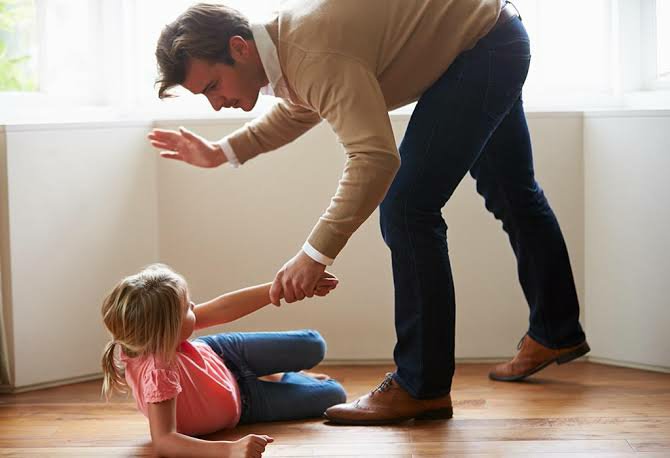
- slapping a child
- using an object to hit a child
- using of hands to hit a child
- calling a child abusive names
- disgracing a child in front of his mates or on the assembly ground.
- arresting the child
- shouting unnecessarily at a child
- beating a child anywhere other than their palm
Teachers and parents who use this method believe that since it worked for their parents then it should work for them.
What you don’t know is these punishments have more negative effects on a child than good.
Why do parents opt for harsh methods of punishments?
Often times, teachers and parents resort to harsh punishments out of desperation. They so want to get rid of that bad behaviour that they believe the painful the punishment the faster the child learns and takes correction. Now based on how successful it was previous times, teachers and parents resort to using such punishment until it becomes a reflex action.
Teachers and parents also use harsh punishments on children because of fear. They so want to end the bad behaviour that they tend to use any punishment they believe will solve the issue quickly.
EFFECTS ON THE CHILD
- reduce their self esteem: you may not realise this but that’s what harsh punishments does to a child. They secretly begin to see others as better than them.
- It would get to a point where the child now is used to your harsh punishments. Once this happens there is a tendency that child will repeat the behaviour since he already knows what the consequence will be
- They lose their childhood and begin to act like adults. That’s not growth but child abuse. When a child starts behaving like an adult then something is wrong.
- It breeds hate: They begin to hate you and this makes learning difficult. Children learn better in a friendly environment.
- When you constantly use harsh punishments on children they would retaliate when they can’t take it any longer. They might shout back at you, walk out on you or worse still, want to hit you back.
- They also would use that same approach on others when they wrong them. Rather than trying to resolve the issue calmly , they also would want to shout and hit their mates.
- They find it difficult to forget those unkind words and pain inflicted on them and this affects how they relate with people. Far when you’ve forgotten the whole event, that child is still there thinking about the pain and names you used on him/her.
When teachers say they didn’t mean to cause pain to the child but just had to use such approach, I totally understand. Children though cute can also be a handful sometimes but there are several ways we can correct them.
ALTERNATIVES TO PUNISHING A CHILD
- Understand they are children and their reasoning is far different from yours. What you term wrong might not be wrong to them.
- Try to be a child when dealing with a child. It’s easier to see things from their perspective and understand the reason for their action.
- Smile often when you’re with your students/children. It becomes easier to try other methods of correction because of the bond you’ve established.
- Listen before taking action: we often don’t give room for explanation when a child does something wrong. No matter how bad an offence you think a child committed, always ensure to ask why he/she behaved that way.
- Don’t take action in a rush: spend the next few minutes thinking of what the child did and other possible methods to use in correcting the child.
- Be wise when dealing with children. Put on your thinking cap.
- Don’t punish a child over a decision taken by the parent. You don’t punish a child for not buying books, payment of school fees etc
- Don’t punish a child when you’re angry or stressed.
- Learn to ignore. You don’t have to punish a child for every wrong action.
- Use verbal corrections: a simple “go and apologise” “don’t do it again” saves the day. Try correcting the child verbally and end it there.
- A child stole a graph book in my class and when I noticed it I quietly returned it to the owner. I learnt he did that because he stays with his grandma and didn’t know how to ask her for the money. I had to call his grandma and told her the boy needs a graph book (I didn’t tell her what happened, it wasn’t necessary). Handle things differently.
I teach in a rural community and I have a class full of students who are always a handful but still I’ve learnt how to handle corrections differently. I advice my students often, I tell them to apologise when wrong, I ask them to sweep the classroom as punishment and other mild approach. I’ve come to understand that majority of my students don’t have the best of parental care and training, why then should I punish them for how they turned out.
Remember there is always an alternative.
The goal has always been to correct and not to inflict pain.

 MISS DAIRO'S SPACE