

As teachers, we are always looking for ways to engage our students, promote learning, and achieve positive outcomes.
One of the most effective ways to do this is through classwork – activities that students complete during class to reinforce learning, develop skills, and promote engagement.
In this post, we will explore five different types of classwork and discuss their benefits. Whether you are a seasoned educator or a new teacher looking for ideas, I hope this post will provide you with inspiration and insight.
“Do-Until-You-Get-It” Classwork

The “Do-Until-You-Get-It” classwork involves students working on a problem until they solve it correctly and then moving on to the next one.
The benefit of this classwork is that it promotes perseverance, problem-solving skills, and mastery of the material.
Students can work at their own pace and receive immediate feedback on their progress, allowing them to build confidence and develop a deeper understanding of the material.
To implement this classwork, teachers can provide a series of problems that students must solve in a specific order. Teachers can also provide support and guidance as needed, helping students overcome any challenges they encounter along the way.
“Group” Classwork

The “Group” classwork involves students working together in small groups to complete a task or project.
The benefit of this classwork is that it promotes collaboration, communication, and teamwork.
Students can learn from each other’s strengths and weaknesses, and the group can work together to achieve a common goal. This classwork can also help students develop social skills and improve their ability to work with others.
To implement this classwork, teachers can assign students to groups and provide them with a specific task or project to complete. Teachers can also provide guidelines and expectations for the group work, ensuring that all students contribute to the project (classwork) and that it is completed on time.
“Explain Your Thinking” Classwork
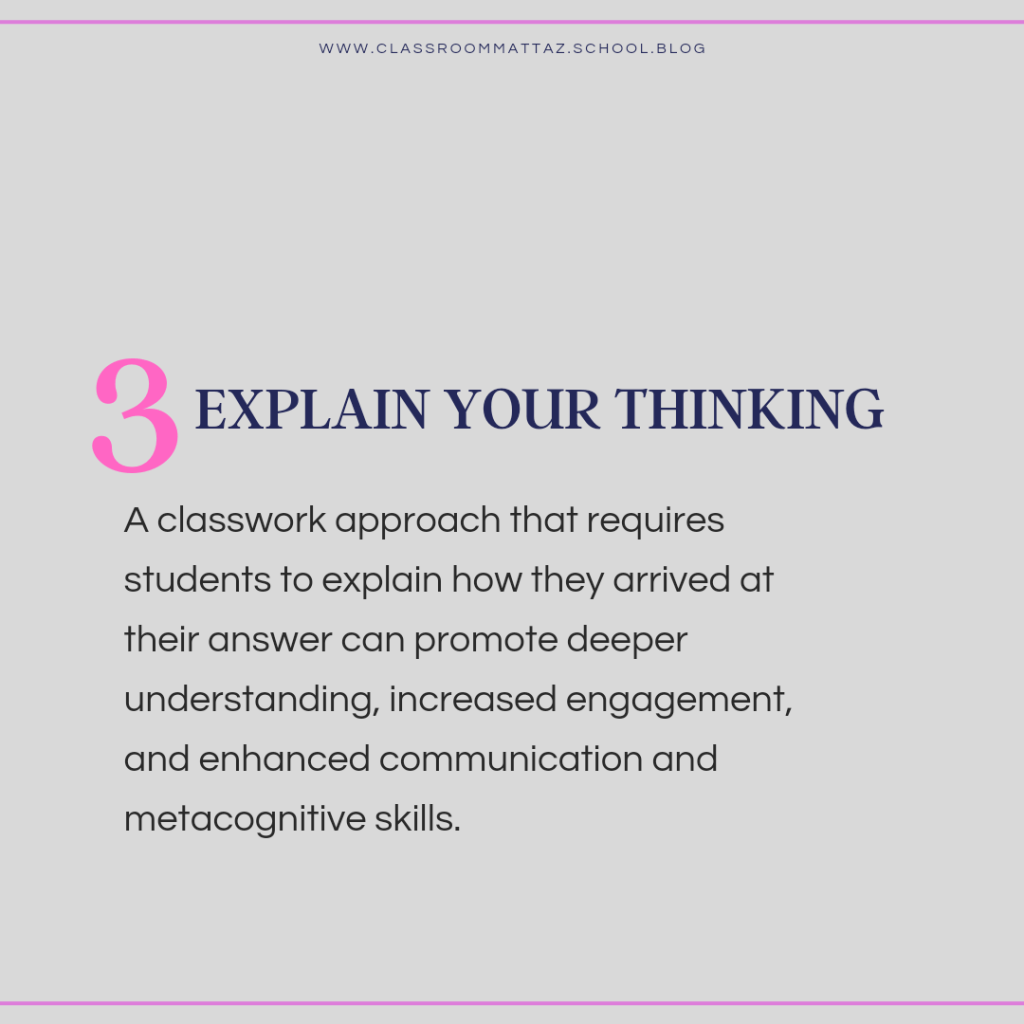
The “Presentation” classwork involves students explaining the steps they took to arrive at an answer. My students know that when they answer a question, I would always ask them to explain how they arrived at their answer.
One benefit of this classwork is that it helps them to be self-aware, be conscious of their thoughts, and learn how to relay them to others. It also promotes critical thinking and research skills.
Students can learn how to effectively convey information to an audience and can receive feedback on their presentation style, content, and delivery.
To implement this classwork, teachers can provide students with a specific classwork, topic, or concept to research and present. Teachers can also provide guidelines and expectations for the presentation, ensuring that all students have a clear understanding of what is expected.
“Board Work Review” Classwork
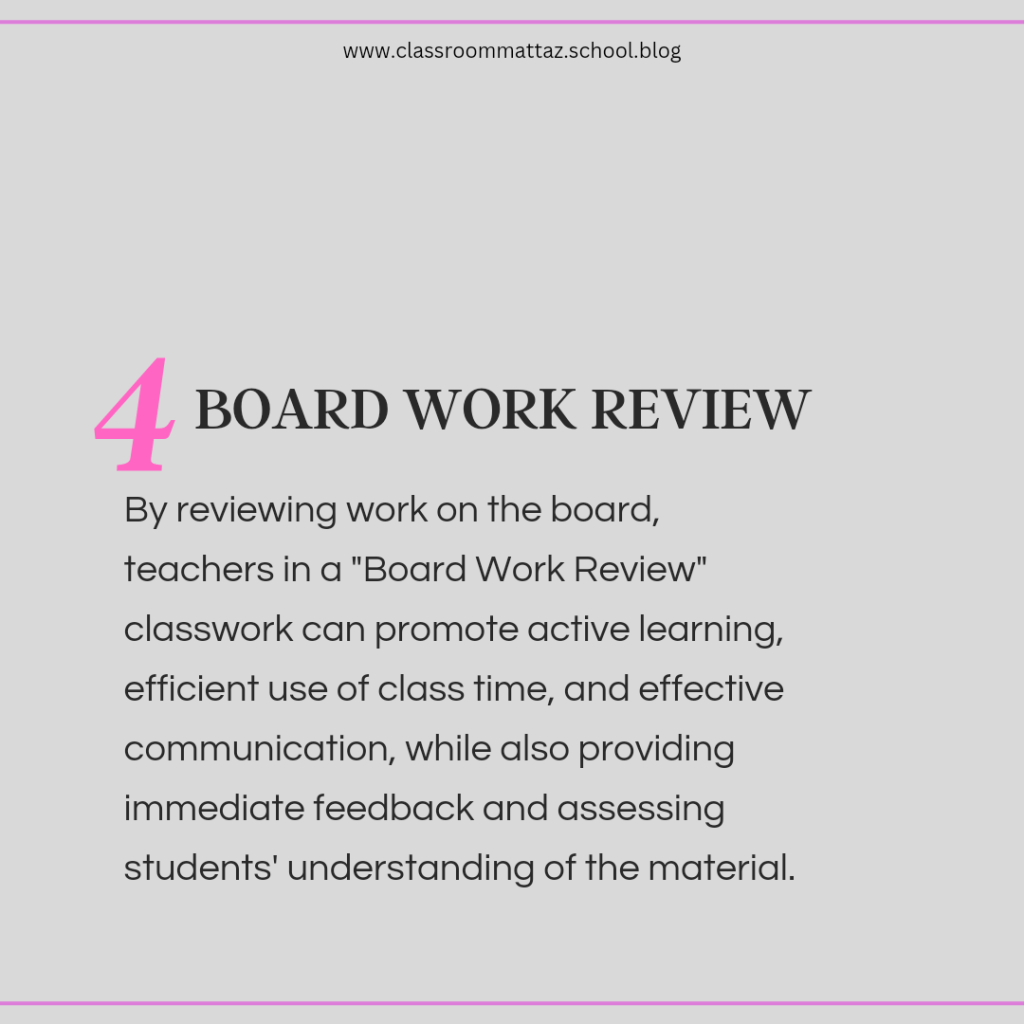
This is the most common type of classwork. After the classwork given has been submitted, the teacher explains and gives the right answer to the questions. The benefit of this classwork is that it promotes immediate feedback, active engagement, and reinforcement of learning.
This is just like giving examples. Every child in class gets the opportunity to understand the topic better since you’re going over the explanations. It helps students develop a deeper understanding of the material and improve their problem-solving skills.
To implement this classwork, teachers can provide students with a specific problem or exercise to complete. Teachers can also review and correct the work as it is submitted, providing feedback and guidance to students as needed.
“In-the-Moment Practice” Classwork
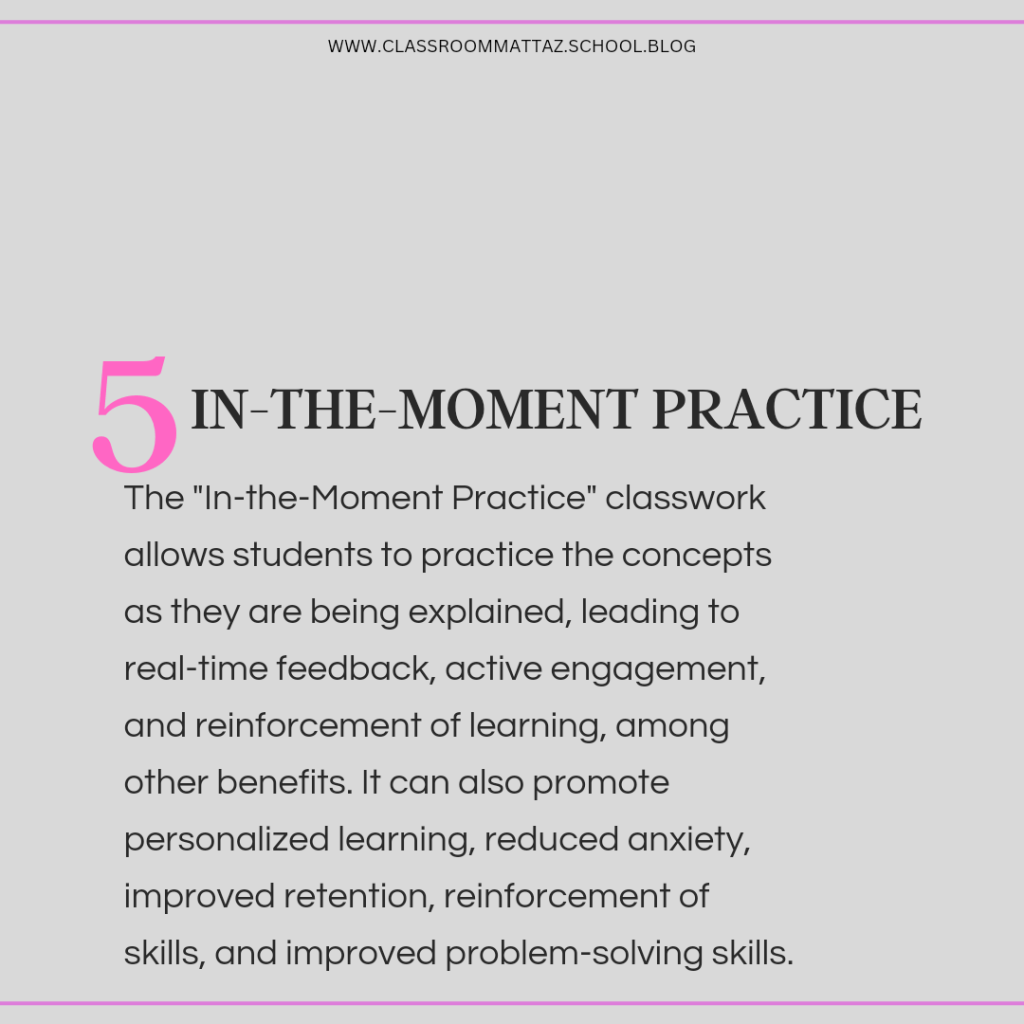
The “In-the-Moment Practice” classwork involves students practicing the concepts as they are being explained. I explain the first example and before explaining the second, they take a short activity based on the first example before we move on to explaining the second example.
The benefit of this classwork is that it provides real-time feedback, active engagement, reinforcement of learning, clarification of doubts, and increased confidence. It also makes it easy to notice if the first example was well understood.
Students can easily work on the activity and identify their errors immediately, it also reduces their anxiety promoting deeper learning. This classwork can also help students develop problem-solving skills and reinforce previously learned concepts.
To implement this classwork, teachers can provide students with specific exercises or examples to work on as they are being explained. Teachers can then observe and provide feedback to students as they work.

If you found this article useful, let’s know in the comment section. I would love to answer your questions too.

 MISS DAIRO'S SPACE
These are good key things to put into practice with the learners in class. Thanks so much for sharing.🙏
LikeLiked by 1 person
Thank you for engaging, Ms. Mercy. You got that right!
LikeLike